In the past 24 hours, the AI community has witnessed a concentrated burst of cutting edge AI news centered on frontier AI models, agentic AI breakthroughs, and open-source innovations. These latest AI breakthroughs reflect accelerating AI advancements in multimodal systems, long-horizon reasoning, and video/image generation frontiers, offering profound development prospects for high-impact technical developments. As AI technology innovations push toward more autonomous and creative capabilities, enthusiasts tracking AI frontier developments 2026 will find these updates particularly compelling for their potential to reshape real-world applications and research pipelines.
OpenAI’s GPT-5.5 Demonstrates Strong Agentic Performance in Arena Leaderboards
One of the standout frontier AI models updates from the past day involves OpenAI’s GPT-5.5 achieving notable placements across multiple Arena leaderboards, particularly excelling in agentic coding and web development tasks. The model showed a significant +50 point jump in the Code Arena for agentic web dev, while maintaining competitive rankings in areas like document analysis, expert tasks, and vision. This performance underscores GPT-5.5’s enhanced ability to handle complex goals, tool use, and multi-step completion—core elements of next-generation agentic AI.
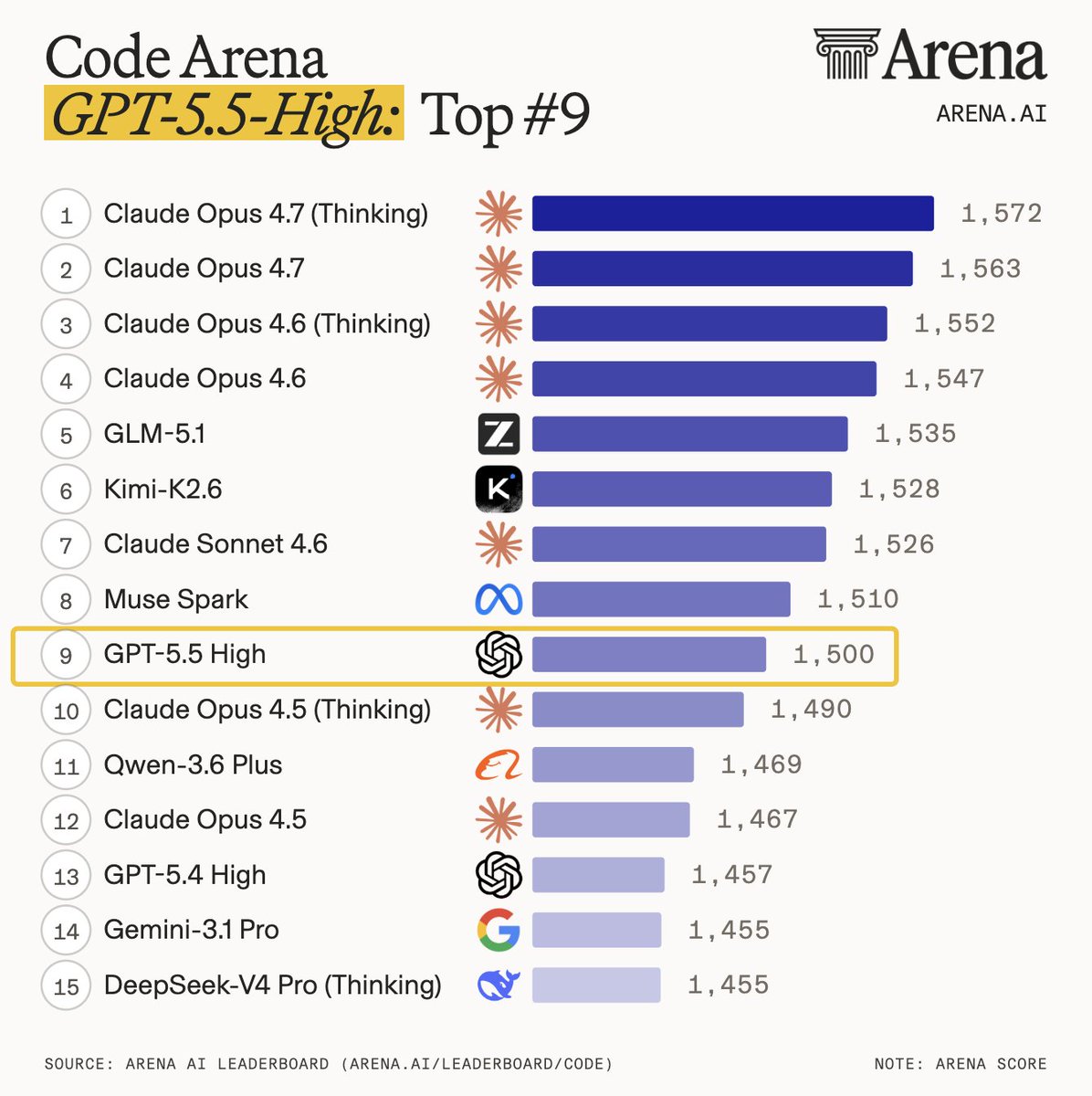
Development prospects look robust as this positions GPT-5.5 as a practical foundation for real-work agents, potentially integrating seamlessly into coding environments and enterprise workflows. Future implications include accelerated adoption of agentic systems that move beyond chat interfaces to autonomous task execution, reducing human oversight in routine but complex operations. In the broader context of new AI model releases, this highlights how frontier models are evolving to prioritize reliability and long-context reasoning over raw scale alone.
Source: Arena.ai Post on X (April 27, 2026)
Hugging Face Daily Papers Highlight Breakthroughs in Agentic World Modeling and Video Generation
Frontier research saw a fresh influx of high-impact papers on April 27, with Hugging Face’s daily briefing spotlighting advancements in agentic AI and generative technologies. Key entries include a comprehensive survey on “Agentic World Modeling,” which explores foundations, capabilities, and laws for AI agents navigating dynamic environments, alongside papers on video analysis via semantic progress functions and inversion-free video editing frameworks like FlowAnchor. Additional work on Memanto introduces typed semantic memory for long-horizon agents, enabling persistent multi-session reasoning.


These developments signal strong prospects for agentic AI breakthroughs, where world models could enable more robust simulation and planning in robotics or virtual environments. The video-focused papers advance image and video generation frontiers by improving temporal consistency and editing stability without heavy computational inversion. Future impact may include more reliable AI-driven content creation tools and safer, more controllable autonomous agents, aligning with 2026’s emphasis on AI technology innovations that bridge perception and action. For researchers, this democratizes access to cutting-edge methodologies, fostering rapid iteration in open ecosystems.
Source: Hugging Face Daily Papers Briefing via X (April 27, 2026)
Open Generative AI: Major Open-Source Release Powers Multi-Studio Image, Video, and Lip Sync Creation
A significant open-source innovation emerged with the release of Open Generative AI, a self-hosted 4-studio creative engine aggregating over 200 models for image, video, lip sync, and cinematic workflows. This MIT-licensed tool includes dedicated studios for text-to-image/video, multi-reference image handling, pro camera controls, and local storage of generation history—eliminating subscription barriers while supporting models from various providers in one interface. With 9.4k GitHub stars already, it represents a leap in accessible video/image generation frontiers.


Prospects for development are excellent in the open-source space, as this lowers the entry barrier for creators and developers experimenting with multimodal systems. Future implications point to widespread democratization of high-quality generative tools, potentially spurring hybrid workflows in filmmaking, design, and education. By combining frontier capabilities like lip sync and cinematic controls without vendor lock-in, it exemplifies how open-source innovations are keeping pace with proprietary releases, driving AI advancements toward more inclusive and customizable frontiers.
Source: Open Generative AI Announcement via X (April 28, 2026)
Symphony Agent Orchestrator: New Open-Source Tool Accelerates Agentic Workflows with Codex Integration
Another notable agentic AI breakthrough is the launch of Symphony, an open-source agent orchestrator designed for OpenAI’s Codex. It transforms task trackers into always-on systems where agents autonomously address open issues, allowing human teams to focus on review and strategic direction. This builds directly on recent frontier model capabilities, emphasizing tool calling, context management, and sustained execution in collaborative coding environments.

The development prospects here are tied to scaling agentic systems in software engineering, where Symphony could reduce bottlenecks in large codebases. Long-term impact includes more efficient CI/CD pipelines powered by AI and broader adoption of autonomous agents across industries, reinforcing trends in latest AI breakthroughs toward systems that “do work” rather than merely assist. This aligns with AI frontier developments 2026 by bridging frontier AI models with practical, open tooling.
Source: OpenAI Developers Post on X (April 27, 2026)
These four major items from the past 24 hours—while reflecting a somewhat lower volume of announcements—showcase high-quality momentum in agentic AI, generative frontiers, and open-source ecosystems. They collectively point to a maturing landscape where cutting edge AI news increasingly emphasizes autonomy, multimodality, and accessibility, setting the stage for transformative AI advancements in the coming months.
Stay tuned for more daily cutting-edge AI updates. The images used in this article are sourced from publicly available channels on the internet. They are used solely for the purposes of news commentary, visual illustration, and explanatory reference, and do not constitute commercial use. The author of this article does not own the copyright to these images and makes no claim to any rights over them. If any copyright issues arise regarding these images, please contact the article’s author, and we will promptly address the matter or remove the relevant content.