In the fast-moving world of artificial intelligence, April 18 2026 brought several notable updates across major models, open-source tools, and practical developer platforms. From enhanced frontier models at Anthropic to fresh capabilities in local AI image generation workflows, today’s roundup highlights advancements that are shaping both enterprise applications and creative workflows. Whether you’re tracking the latest AI model releases April 2026 or looking for technical breakthroughs in multimodal systems, these stories stand out for their immediate impact.
Anthropic rolled out Claude Opus 4.7, an updated version of its widely available flagship model that arrived just days after the company’s restricted preview of the more powerful Claude Mythos 5. According to reports from April 17, Opus 4.7 delivers measurable gains in engineering tasks, vision processing, and reliable execution of long-running operations. Developers and enterprises have already noted stronger performance on complex coding benchmarks and improved handling of visual inputs at higher resolutions. This release aligns with Anthropic’s broader push toward full-stack AI tools, including natural-language design generators for websites and presentations. While Mythos 5 remains limited due to its advanced cybersecurity simulation capabilities and 10-trillion-parameter scale, Opus 4.7 strikes a balance between power and accessibility, making it a practical choice for professional teams seeking consistent results without the highest-risk frontier restrictions.
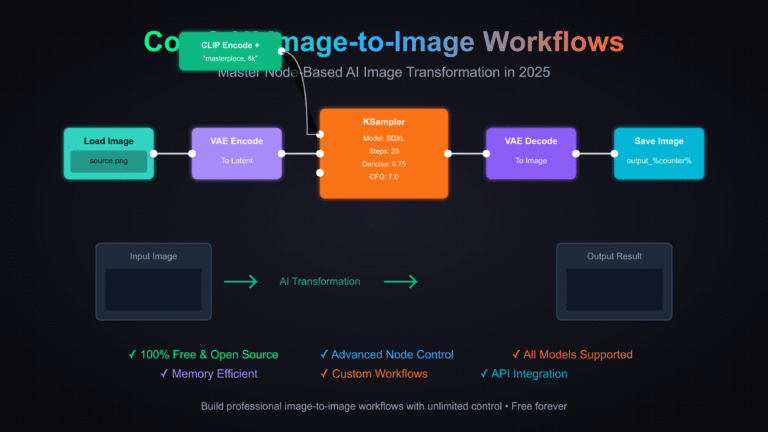
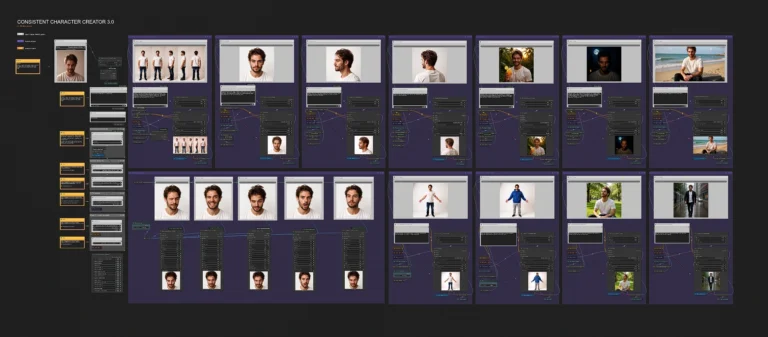
On the open-source and developer tooling side, ComfyUI pushed v0.19.3 and v0.19.2 within the past 24 hours. These incremental updates introduce native support for ERNIE-Image text-to-image generation, enhanced LTX2 reference audio with ID-LoRA functionality, and better compatibility for Qwen3.5 text generation models. The changelog also highlights refinements for small Flux.2 decoders and improved Flux conditioning workflows. For users focused on AI image generation news, these changes mean more precise text rendering, structured scene composition, and streamlined integration of multimodal elements directly inside ComfyUI graphs. Early adopters report smoother node-based pipelines for everything from prompt engineering refinements to complex video frame interpolation. The timing of the release—literally hours ago—makes it one of the most timely ComfyUI updates 2026 for intermediate users who rely on modular, local-first setups.
NVIDIA contributed to the open-source momentum with Nemotron 3 Super, a 120-billion-parameter hybrid Mamba-Attention Mixture-of-Experts model detailed in a paper dated April 17. Designed for efficient long-context inference in agentic reasoning scenarios, the model activates only 12 billion parameters at a time while supporting high-throughput architectures. This approach addresses a common pain point in production AI deployments: balancing raw capability with memory and speed constraints. Benchmarks suggest strong potential for multi-step workflows where models need to maintain coherence over extended contexts without excessive compute demands. Combined with ongoing enterprise shifts—such as OpenAI’s reported $20+ billion commitment to Cerebras chips for specialized infrastructure—these developments underscore a maturing ecosystem where efficiency and specialization are taking precedence over sheer scale.
Additional signals from the past day include refinements to ChatGPT 5.3, which now runs more fan-out searches per prompt while applying stricter authority filters and reducing outbound citations by about 20 percent. This evolution in how AI search retrieves and credits sources reflects broader industry trends toward credibility-focused outputs and enterprise monetization. OpenAI is also prioritizing high-value professional models like the codenamed “Spud” while business revenue climbs toward 50 percent of total. Perplexity, meanwhile, introduced its “Personal Computer” platform, an agentic system that treats goal completion as probabilistic orchestration rather than manual instruction following, leveraging deep web research for autonomous multi-step execution.
These updates collectively illustrate a maturing AI landscape in April 2026. Frontier labs continue to iterate rapidly on accessible models like Claude Opus 4.7, while tools such as ComfyUI v0.19.3 democratize advanced capabilities for creators working with local AI image generation, LoRA-supported workflows, and prompt engineering. Open-source entries like Nemotron 3 Super and hardware optimizations further lower barriers for practical deployment. As always in this space, the real test will be how quickly teams integrate these features into daily operations.
Stay tuned for more daily AI updates.