The AI industry is shifting from pure model capability races toward deep integration of compute, infrastructure, and autonomous agents. In the past 24 hours, key players executed moves that prioritize scalable execution over isolated intelligence leaps. xAI monetizes its massive Colossus infrastructure by supplying compute to a rival, NVIDIA secures critical optical connectivity for next-gen clusters, and Google advances consumer-facing agents.
This reflects a maturing landscape where energy, networking, and orchestration bottlenecks dominate over raw parameter counts. Frontier labs now treat infrastructure as a core competency and revenue stream, while agents evolve from experimental tools into persistent digital coworkers. The competitive edge increasingly belongs to those controlling physical layers—power, interconnects, and data-center ecosystems—rather than solely model weights. Expect accelerated vertical integration, with hyperscalers and specialized builders racing to lock in supply chains amid surging demand.
Major Updates (sorted by impact)
xAI/SpaceX Supplies Colossus 1 Compute to Anthropic, Signals Neocloud Pivot
What happened: SpaceX/xAI agreed to provide Anthropic full access to the Colossus 1 data center in Memphis—over 300MW and 220,000+ NVIDIA GPUs—within the month. The deal includes exploration of multi-gigawatt orbital compute. xAI had already shifted its training to Colossus 2.
Why it matters and technical explanation: This transforms xAI from a pure model developer into a compute provider. Colossus 1, built rapidly, now generates immediate revenue while freeing xAI’s newer cluster for internal Grok work. Technically, it leverages dense GPU deployments with advanced networking; the space angle targets power and cooling advantages in orbit, potentially bypassing terrestrial energy constraints through Starship-scale launches and Starlink connectivity.
What problem does this solve? Acute compute scarcity for frontier training and inference. Hyperscale demand outstrips supply, driving up costs and delays.
Who is impacted? Anthropic gains instant capacity scaling; xAI diversifies revenue; NVIDIA benefits indirectly via sustained GPU demand; broader ecosystem sees faster iteration across labs.
What changes in real usage? Anthropic can raise usage limits immediately for Claude deployments. Developers and enterprises get more reliable access to high-end inference without waiting on new builds. xAI users may see indirect benefits from accelerated internal progress.
What is the hidden implication? The “neocloud” model gains legitimacy—specialized AI infrastructure providers can monetize hardware faster than model monetization alone. This pressures traditional clouds and accelerates commoditization of training runs.
What might break or fail? Integration challenges across clusters, power delivery reliability, or regulatory hurdles for orbital compute. Rapid scaling could expose security or efficiency gaps in shared infrastructure.
One actionable insight: Builders should evaluate multi-provider strategies now. Treat compute as a diversified supply chain input rather than assuming single-vendor lock-in; prototype migrations to test latency and cost across xAI, core clouds, and emerging players.
NVIDIA-Corning Partnership Expands U.S. Optical Connectivity 10x for AI Factories
What happened: NVIDIA and Corning announced a multiyear deal: Corning will build three new U.S. factories (North Carolina, Texas) dedicated to optical solutions, expand fiber production >50%, create 3,000+ jobs, and increase optical connectivity capacity 10x to support NVIDIA’s AI infrastructure.
Why it matters and technical explanation: AI clusters are hitting interconnect bottlenecks. Copper limits bandwidth and distance at scale; optical fiber enables higher throughput, lower power, and denser racks (potentially replacing thousands of copper cables per system). This secures supply for NVIDIA’s Vera Rubin and future platforms while reshoring critical manufacturing.
What problem does this solve? Escalating demand for high-speed, low-latency networking in massive GPU clusters, where optics become the differentiator for performance-per-watt and total cost of ownership.
Who is impacted? NVIDIA ecosystem (hyperscalers deploying GB200/Blackwell clusters), data center operators, and U.S. manufacturing. Downstream: faster rollout of exascale AI systems.
What changes in real usage? Deployments shift toward optics-native designs, enabling larger, more efficient training runs with reduced cabling complexity and energy use. Builders gain predictable supply for new clusters.
What is the hidden implication? Optics emerges as the next strategic chokepoint after chips and power. This deal validates a hardware-software co-design era where interconnects dictate scaling laws more than FLOPs alone.
What might break or fail? Manufacturing ramp delays, yield issues in new fabs, or unforeseen compatibility with existing liquid-cooled GPU architectures. Geopolitical risks in supply chains persist.
One actionable insight: For infrastructure teams, audit current networking stacks and model TCO shifts to optics. Prototype small-scale optical upgrades in inference clusters to quantify gains before full factory-scale commitments.
Google Tests Remy: 24/7 Gemini-Powered Personal Agent
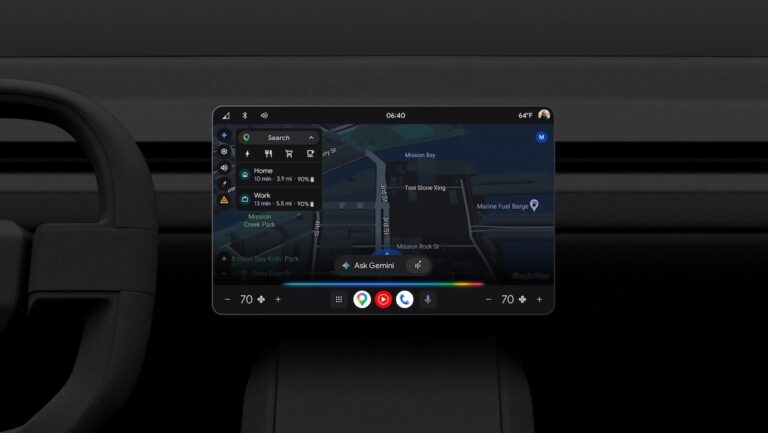
What happened: Google is internally testing “Remy,” a Gemini-based AI agent described as a “24/7 personal agent” for work, school, and daily life. It integrates across Google services, takes proactive actions, monitors priorities, and learns user preferences.
Why it matters and technical explanation: Moves beyond chat to persistent, cross-app orchestration. Remy leverages Gemini’s multimodal and reasoning strengths for background execution, context retention, and service integrations (Gmail, Docs, Maps, etc.).
What problem does it solve? Fragmented AI assistance—users currently context-switch across tools; agents promise seamless, anticipatory workflows.
Who is impacted? Google users and developers (deeper ecosystem lock-in); competitors in consumer agents (OpenAI’s OpenClaw equivalents). Enterprise adoption via Workspace likely follows.
What changes in real usage? Gemini app evolves into an autonomous assistant handling multi-step tasks (e.g., research → document → schedule) without constant prompting. Early testers report proactive monitoring.
What is the hidden implication? Consumer agent race intensifies; Google’s distribution advantage (Android, Search, Workspace) could accelerate mainstream adoption, pressuring pure-play AI companies.
What might break or fail? Over-automation errors, privacy concerns with deep integration, or reliability in complex real-world actions. User trust hinges on control mechanisms.
One actionable insight: Experiment with existing Gemini tools for workflow automation. Map your daily tasks to potential agent handoffs and prepare data/privacy policies for deeper integrations.
What This Means for Builders / Creators
Prioritize infrastructure-aware development. Adopt cost-optimized models like Grok 4.3 for high-volume tasks while monitoring xAI’s compute plays for cheaper scaling. Build agentic prototypes now using available tool-calling and orchestration frameworks—Remy signals that persistent, multi-service agents will be table stakes soon.
Ignore pure hype around new parameter counts; focus on reliability, latency, and integration. Watch optical and power supply chains—delays here will bottleneck deployments more than model releases. Diversify providers aggressively; the era of single-cloud or single-lab dependence is ending.
For creators, test Remy-style agents in Google ecosystem for content pipelines or personal productivity. Hardware-adjacent builders should explore optics partnerships or edge optimizations as clusters evolve.
Sources
- NVIDIA/Corning Official Announcements
- xAI / Anthropic Partnership Details
- Business Insider, TechCrunch, and Reuters Reporting on Remy and Compute Deals
- OpenAI and xAI API/Release Notes (contextual)
Disclaimer
The images used in this article are sourced from publicly available channels on the internet.