OpenAI Frontier Launches as New Enterprise AI Platform
AI news May 2026 highlights a pivotal infrastructure play rather than raw model capability jumps. On May 11, OpenAI launched the OpenAI Deployment Company (DeployCo), a majority-owned subsidiary seeded with over $4 billion from 19 investors including TPG, Advent, Bain Capital, Brookfield, Goldman Sachs, and others. It also announced the acquisition of Tomoro, an applied AI engineering firm bringing ~150 forward-deployed engineers.
This move signals the AI ecosystem’s maturation from experimental pilots to production-grade, embedded intelligence. Builders and enterprises no longer wrestle solely with API calls—they gain dedicated teams that treat frontier models as core operating system components.
The Shift from Model Provider to Full-Stack Intelligence Partner
What problem does this solve? Most enterprises stall at proof-of-concept because integrating LLMs with legacy systems, proprietary data, compliance regimes, and real-time workflows demands rare talent. DeployCo embeds “forward deployed engineers” inside client organizations, Palantir-style, to co-build reliable AI systems tied to actual business data and tools.
Who is impacted? Large enterprises in finance, healthcare, manufacturing, and regulated sectors gain accelerated paths to production. Smaller developers and mid-market firms may face higher barriers if talent concentrates further with big players. OpenAI gains deeper moat through proprietary integration IP and usage lock-in.
What changes in real usage? Previously, teams spent months on RAG pipelines, tool calling, and evaluation loops that still hallucinated on domain-specific edge cases. Now, embedded experts can implement persistent agentic workflows with human oversight loops, custom fine-tunes on private data, and monitoring that catches drift in real time. Latency-sensitive operations (e.g., financial trading signals or supply chain optimization) become feasible without constant vendor back-and-forth.
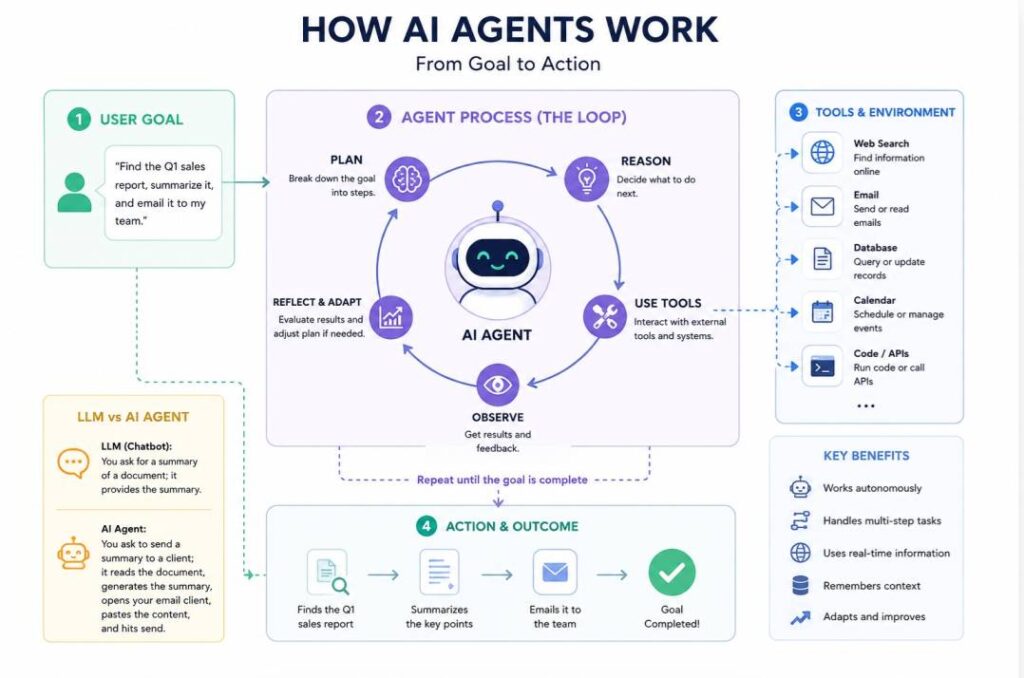
What Are AI Agents? A Complete Guide for 2026 – Tech Business News
Hidden implication: This accelerates the “agentic era” by commoditizing deployment expertise. Model performance plateaus matter less when the bottleneck shifts to integration depth and trust. Expect faster proliferation of multi-agent systems where specialized agents (research, execution, verification) orchestrate across enterprise toolchains.
What might break or fail? Over-reliance on OpenAI-controlled deployment could create vendor lock-in, data sovereignty risks in highly regulated industries, or single points of failure if integration assumptions mismatch evolving model behaviors. Talent poaching from competitors may intensify short-term friction.
Actionable insight for builders: Prioritize designing modular, observable agent architectures now. Instrument every workflow with traces, human-in-the-loop gates, and fallback mechanisms. This positions you to leverage services like DeployCo without becoming captive.
Infrastructure and Ecosystem Ripples
The launch aligns with broader 2026 trends: massive compute deals (e.g., Anthropic’s recent SpaceX Colossus capacity), enterprise revenue explosions (Anthropic ARR reportedly surging), and hardware providers like NVIDIA riding sustained demand.
Performance implication: Deployment velocity now becomes the differentiator. A model scoring 5% higher on academic benchmarks delivers marginal value compared to one reliably executing 80% of a complex workflow end-to-end in production.
Infrastructure implication: Expect hyperscalers and consultancies to accelerate similar service arms. Data center buildouts will emphasize not just FLOPs but secure, auditable inference clusters with enterprise-grade SLAs. Power and cooling constraints will drive hybrid edge-cloud architectures.

The Stargate Project: AI of the Future
Ecosystem implication: Open-source communities and smaller providers may double down on developer tooling, evaluation frameworks, and interoperability layers to remain viable. Watch for increased standardization around agent protocols and memory stores.
Developer implication: Coding assistants evolve from autocomplete to full co-engineers embedded in your IDE and CI/CD. Focus shifts to prompt engineering for agents, evaluation harnesses, and system design for reliability.
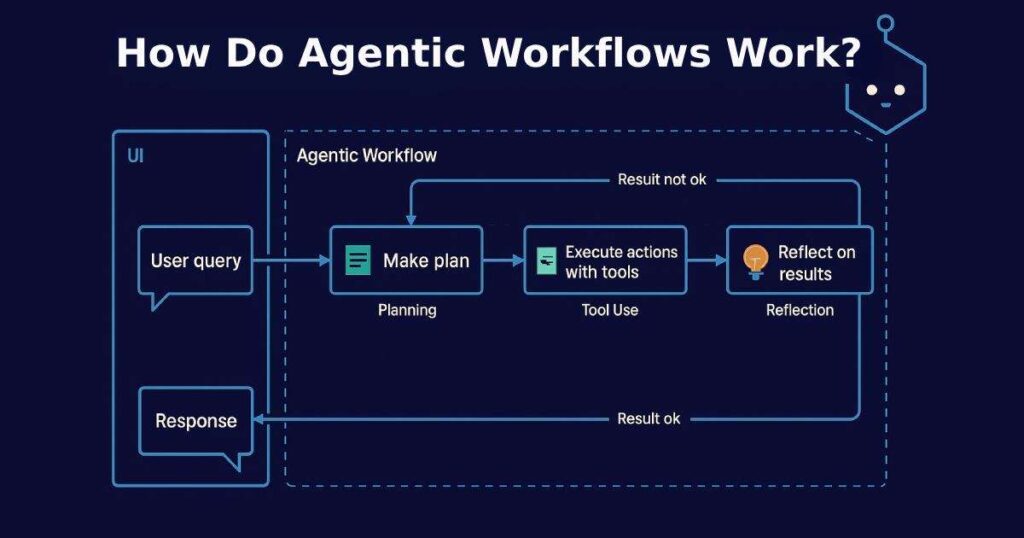
What are Agentic Workflows? Key Benefits and Challenges in 2026
Enterprise implication: AI budgets migrate from experimentation to transformation line items. Boards will demand ROI metrics tied to revenue, cost savings, or risk reduction rather than token usage. Compliance teams gain new tools but also new headaches around auditability of deployed agents.
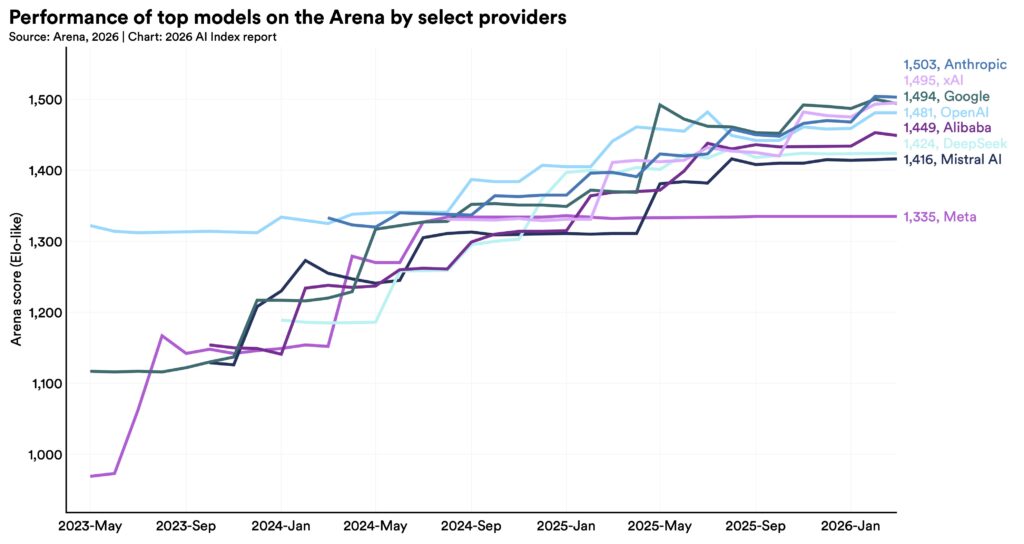
Want to understand the current state of AI? Check out these charts. | MIT Technology Review
What This Means for Builders, Creators, and Businesses
Adopt agentic thinking immediately. Design processes assuming semi-autonomous loops with reflection and tool use rather than single-turn prompts. Experiment with open frameworks for orchestration while piloting DeployCo-style services for high-stakes domains.
Ignore pure hype around next-token prediction gains. Monitor integration depth, security certifications, and real-world uptime metrics instead.
Opportunities emerge for specialists in agent evaluation, synthetic data generation for domain adaptation, and hybrid human-AI workflow design. Creators benefit from more reliable tools for video, design, and content pipelines once enterprise-grade reliability reaches consumer tiers.
The competitive landscape tilts toward companies treating AI as infrastructure. Those who embed intelligence into core operations fastest will compound advantages; laggards risk irreversible gaps.
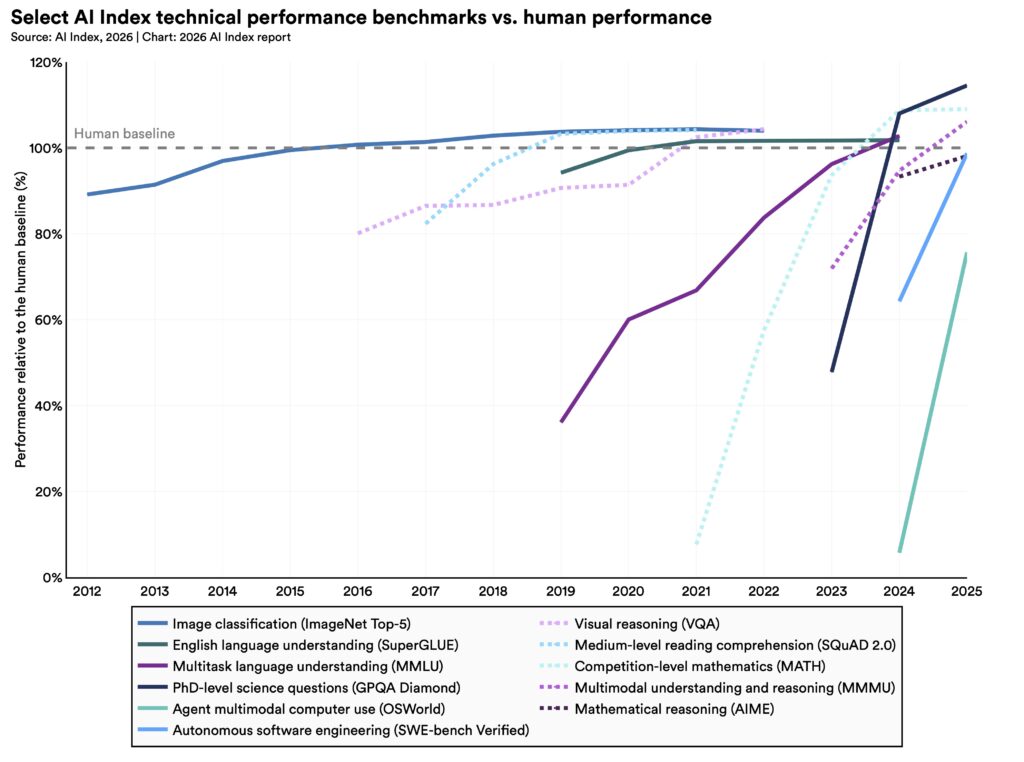
Want to understand the current state of AI? Check out these charts. | MIT Technology Review
AI industry news 2026 underscores a truth: capability gains alone no longer win. Execution at scale does. OpenAI’s move professionalizes the last mile of AI adoption, forcing the entire ecosystem to level up on reliability, integration, and business alignment.
Sources
- OpenAI Official Announcement (May 11, 2026)
- Axios, TechCrunch, and Reuters coverage of DeployCo launch
- Related enterprise AI deployment discussions across industry reports
Disclaimer The images used in this article are sourced from publicly available channels on the internet. They are used solely for the purposes of news commentary, visual illustration, and explanatory reference, and do not constitute commercial use. The author of this article does not own the copyright to these images and makes no claim to any rights over them. If any copyright issues arise regarding these images, please contact the article’s author, and we will promptly address the matter or remove the relevant content.