AI industry news May 2026 reveals a clear acceleration in moving beyond isolated chat interfaces. The past 24 hours highlight xAI’s rollout of deep tool integrations and supporting model capabilities that turn assistants into operational coworkers. This isn’t incremental polish—it’s a structural change in how developers and enterprises embed AI into daily toolchains.
Introduction: From Chat to Connected Execution Layer
The AI ecosystem in May 2026 is pivoting hard toward persistent, tool-native agents. Standalone LLMs are becoming infrastructure layers that read/write across enterprise systems without brittle APIs or constant context switching. xAI’s latest moves exemplify this: Grok gains native connectors to productivity suites, desktop-level agency, and a high-performance base model optimized for agentic tool use at aggressive pricing.
Competitively, this pressures players like Anthropic and OpenAI, who have their own agent experiments, but xAI is shipping production-grade integrations faster and cheaper. Infrastructure trends favor unified multimodal reasoning (echoed in NVIDIA’s earlier Nemotron Omni releases) and lower inference costs to enable always-on agents. For builders, this means workflows evolve from prompting in a box to orchestrating real actions across apps, repos, and desktops. Adoption is shifting from experimentation to operational embedding, particularly in sales, support, engineering, and knowledge work.
xAI Grok Connectors: Turning Grok into a Native Enterprise Operator
xAI launched Connectors across Grok Web, iOS, and Android, enabling deep bidirectional integrations with SharePoint, Outlook, OneDrive, Google Workspace, Notion, GitHub, Linear, and custom MCP servers. With write access, Grok can edit documents, send emails, update tasks, review code, and synthesize organizational data directly in chat.
What problem does this solve? Fragmented context and manual copy-paste loops that kill agent reliability. Agents previously hallucinated actions or required fragile wrappers; now they operate inside the source systems.
Who is impacted? Enterprise teams, developers, and knowledge workers using Microsoft 365, Google Workspace, or dev tools. Sales/support teams using Starlink-like autonomous flows gain immediate leverage.
What changes in real usage? You no longer export a Notion database or GitHub issue to prompt—Grok queries, summarizes, edits, and commits in place. Context stays fresh without token bloat from screenshots or pastes.
Hidden implication: This commoditizes “agent memory” by leveraging existing enterprise auth and data layers. It reduces the need for custom vector stores or RAG pipelines for many internal use cases, shifting spend toward integration reliability over raw model scale.
Performance implication: Powered by Grok 4.3’s strong instruction following and tool calling, enabling reliable multi-step edits without excessive latency.
What might break or fail? Permission creep, data exfiltration risks if write scopes are over-granted, or connector downtime cascading to workflows. Custom MCP servers introduce security surfaces.
Actionable insight: Builders should audit existing tool auth flows now and prototype Grok Connectors for high-friction processes like PR reviews or meeting triage. Start with read-only to validate ROI before enabling writes.
Grok 4.3 + Supporting Capabilities: Cost-Efficient Agent Foundation
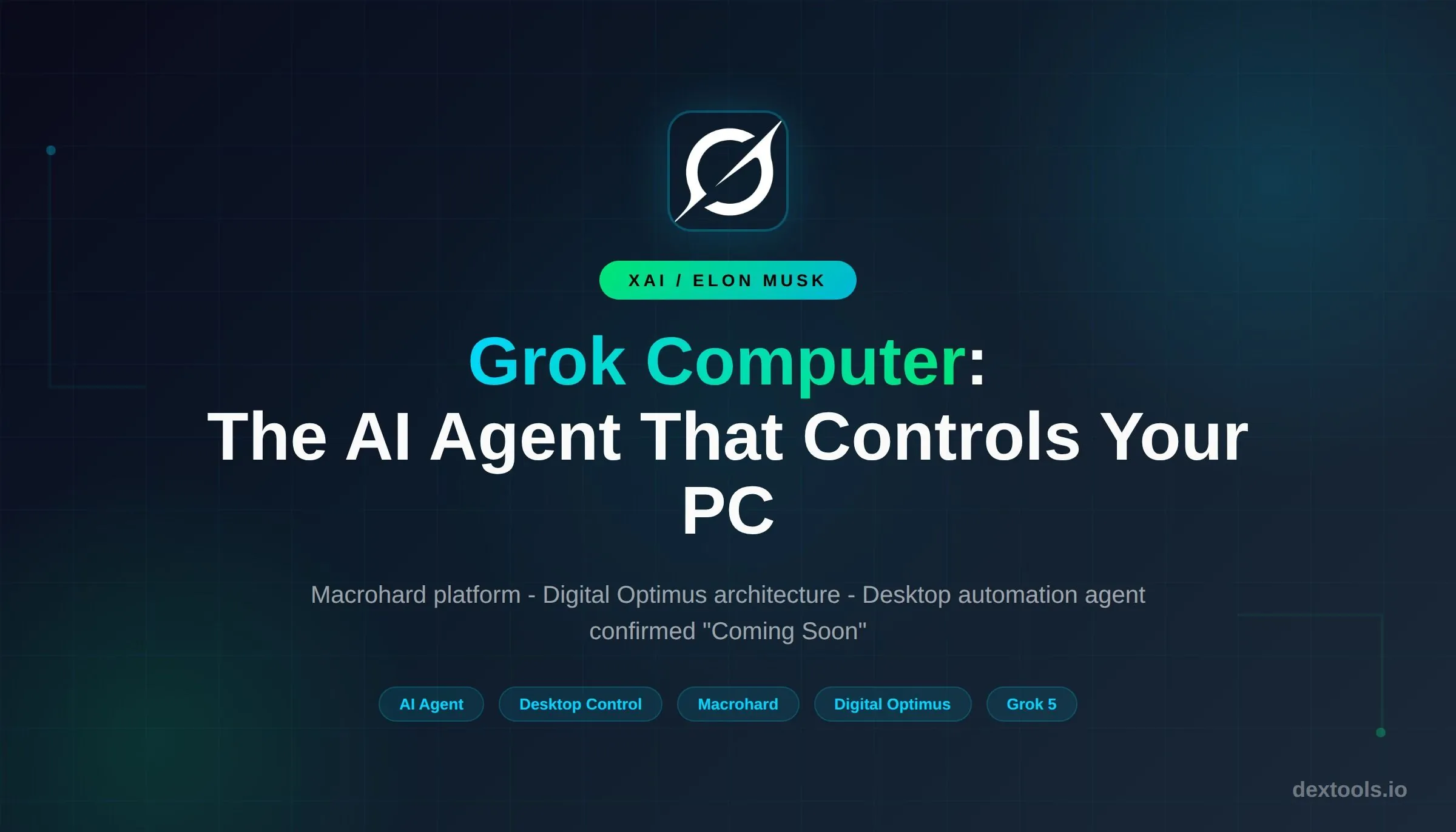
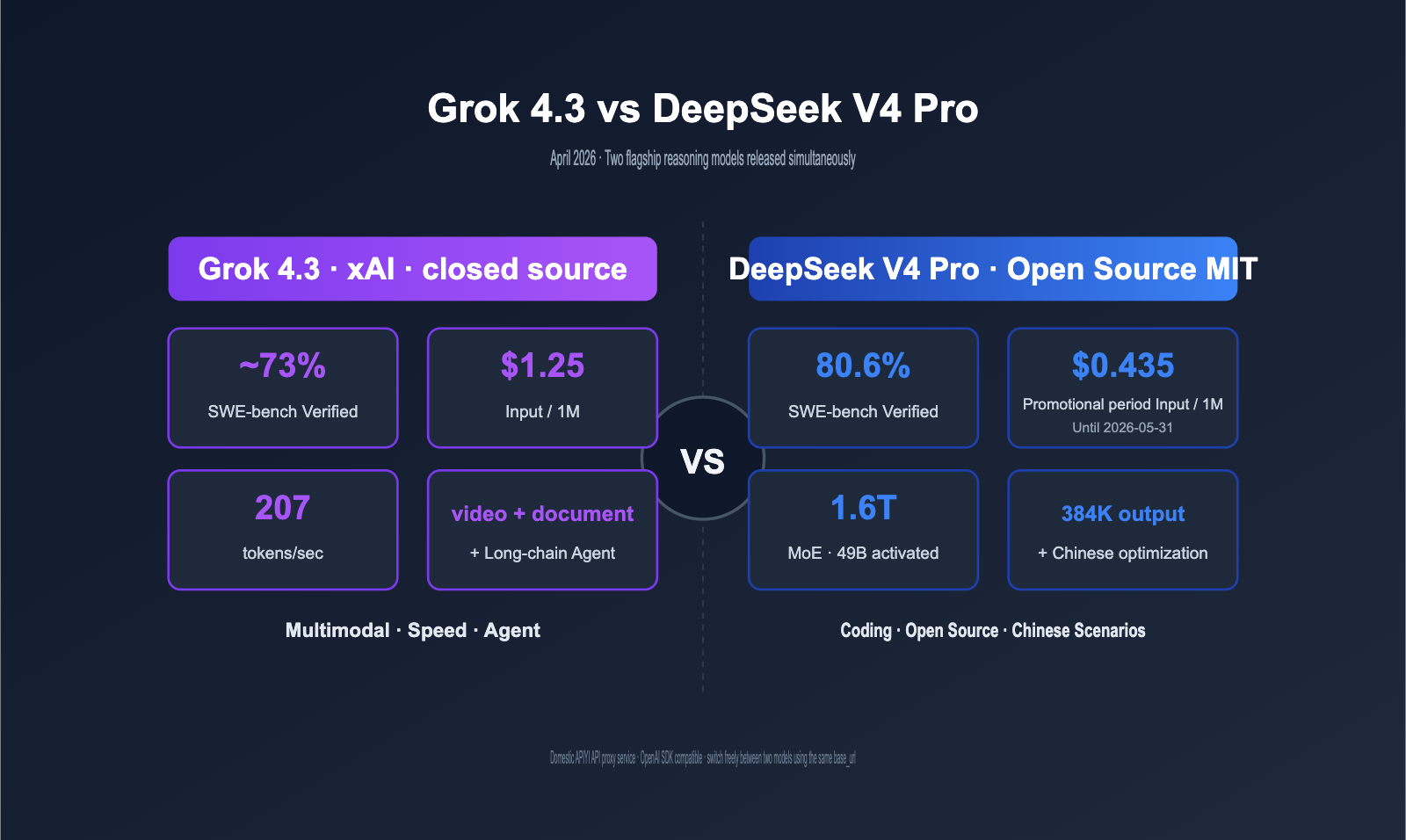
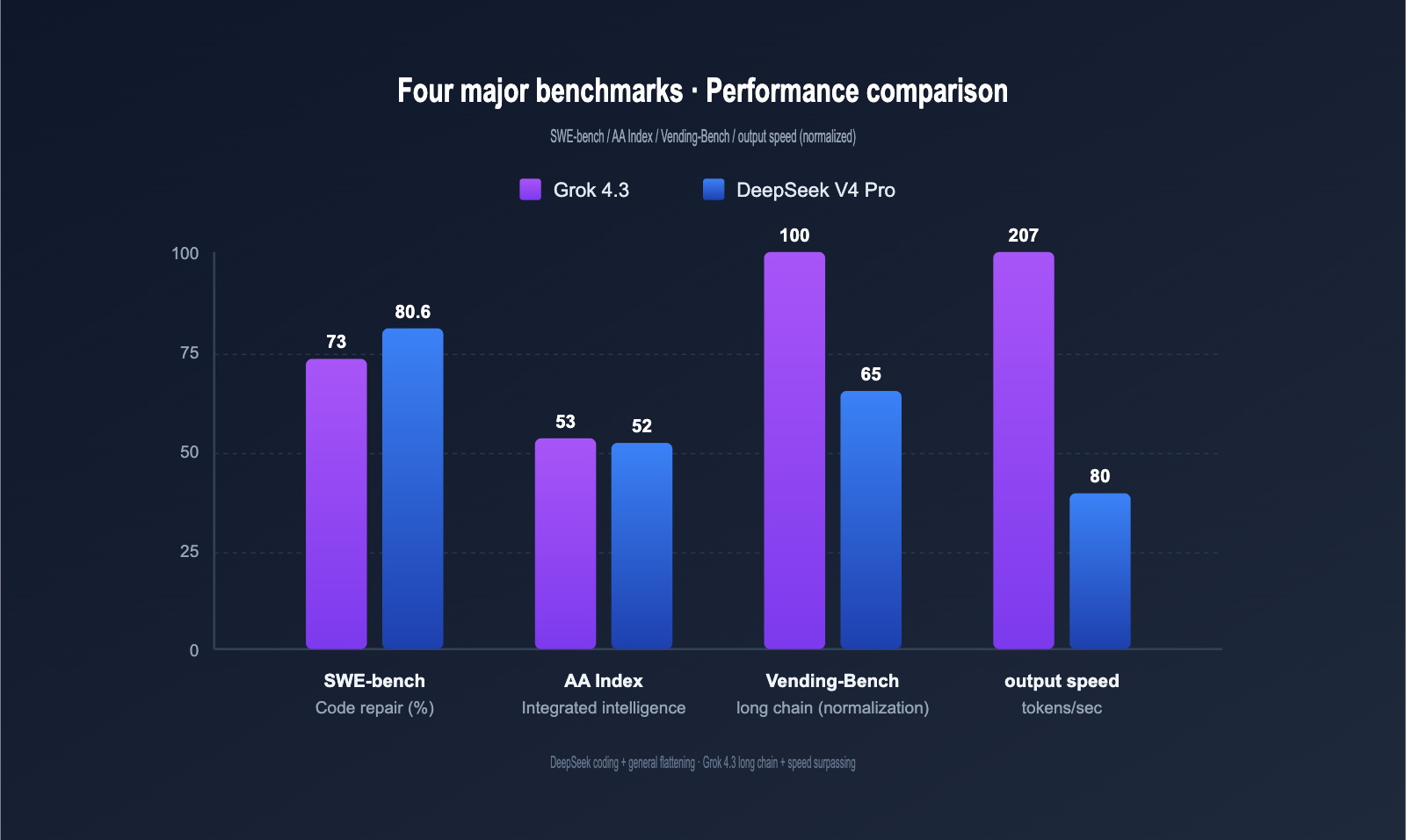
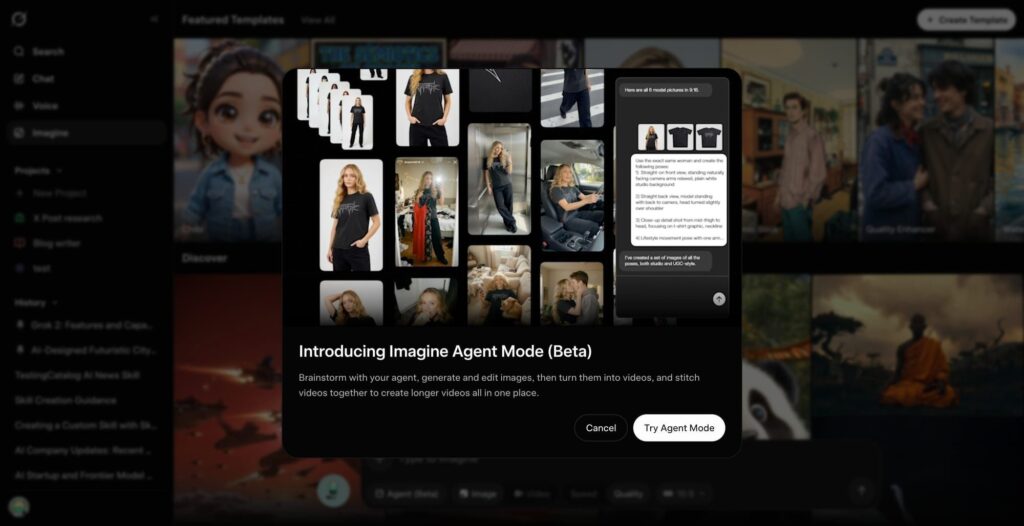
xAI released Grok 4.3 with 1M context, native video, aggressive pricing (~$1.25/M input tokens), top marks in private legal/finance benchmarks, and enhanced agentic features. Complementary updates include Grok Computer (desktop agent with CLI/file access), advanced voice cloning, and Imagine Quality Mode.
What problem does this solve? High inference costs and weak tool use that made scalable agents uneconomical. Previous generations traded intelligence for speed/cost; 4.3 narrows that gap while adding execution primitives.
Technical explanation: Improved architecture for non-hallucination, structured outputs, and long-chain reasoning. Voice “Think Fast” enables real-time listening/reasoning/response with zero added latency—critical for customer-facing autonomy.
Real-world impact: Starlink support reportedly resolves 70% of tickets autonomously. Developers get a pair-programmer that refactors codebases directly on desktop. Creators gain hyper-realistic image gen with brand control.
Ecosystem implication: Lowers the barrier for indie developers and mid-market companies to deploy production agents. OpenRouter availability broadens access, pressuring closed ecosystems.
What might break? 1M context still incurs higher costs beyond 200K; desktop agents risk local system instability or security issues if not sandboxed properly.
Actionable insight: For enterprises, benchmark Grok 4.3 against your highest-volume agent workloads (e.g., ticket routing or doc analysis). The price/performance shift makes replacing multiple specialized models viable.
What This Means for Builders, Creators, Developers, and Businesses
Adopt now: Grok Connectors and Grok Computer for any workflow involving Microsoft/Google productivity, GitHub, or Notion. Voice and desktop agents for real-time customer/operational automation. Test 4.3 on cost-sensitive, long-context tasks.
Ignore for now: Pure hype around raw benchmark scores without tool-use validation. Generic chat wrappers that don’t leverage native integrations.
Monitor: Permission and security models around bidirectional connectors. How competitors (Claude, GPT agents, Gemini) respond with their own deep integrations. Regulatory vetting discussions that could slow frontier releases.
Emerging opportunities: Agent orchestration platforms that route across Grok + other models via MCP. Vertical solutions (legal, finance) using Grok’s benchmark strengths. Custom voice libraries for branded support experiences. Infrastructure plays optimizing for 1M+ context at scale.
Operationally, teams can collapse multi-tool dashboards into Grok sessions. Developers shift from writing glue code to higher-level orchestration. Businesses gain faster automation with lower custom dev overhead—but must invest in governance.
This May 2026 wave solidifies the move to agentic execution layers. The winners will be those who treat AI as infrastructure that acts inside existing systems, not a separate app. Builders who integrate deeply now will compound advantages as these capabilities mature.
Sources
- xAI Official: Grok Connectors Announcement
- xAI Docs & Release Notes for Grok 4.3
- Supporting coverage from VentureBeat and developer benchmarks
Disclaimer “The images used in this article are sourced from publicly available channels on the internet. They are used solely for the purposes of news commentary, visual illustration, and explanatory reference, and do not constitute commercial use. The author of this article does not own the copyright to these images and makes no claim to any rights over them. If any copyright issues arise regarding these images, please contact the article’s author, and we will promptly address the matter or remove the relevant content.”