As of May 2, 2026, the ComfyUI ecosystem continues its rapid evolution as the premier node-based platform for local AI generation. With strong support for cutting-edge models like Flux variants, Wan video, Kling, ERNIE, and emerging video pipelines, ComfyUI remains the go-to for advanced users demanding granular control, performance, and extensibility.
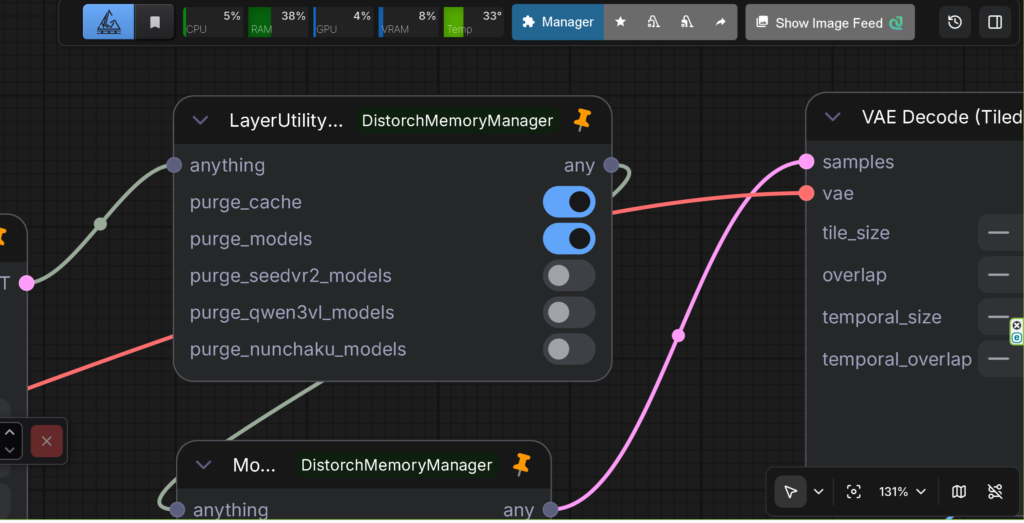
GitHub – ussoewwin/ComfyUI-DistorchMemoryManager: ComfyUI-VRAM-Manager is an independent memory management custom node for ComfyUI. Provides Distorch memory management functionality for efficient GPU/CPU memory handling. Supports purging of SeedVR2 …
In the past 12 hours (UTC May 2 00:00 onward), activity has centered on incremental but impactful core improvements rather than flashy new model integrations. These changes address real-world pain points in memory management, hardware compatibility (especially AMD), and image loading efficiency—critical for stable, large-scale workflows involving high-resolution video or multi-model chaining.
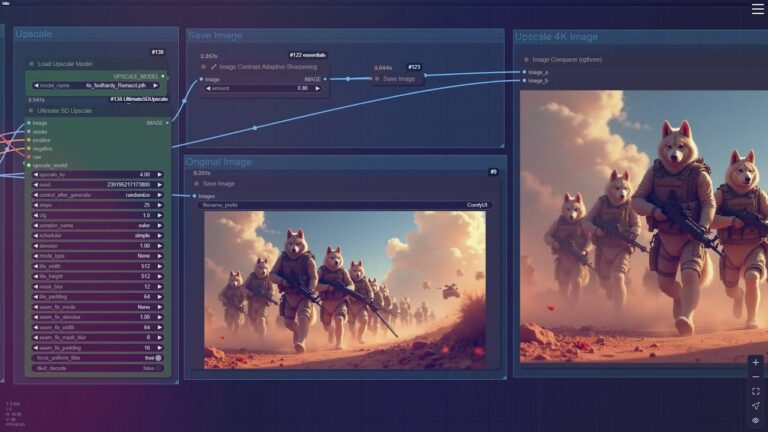
Under the hood, ComfyUI’s modular architecture shines here: dynamic VRAM handling, optimized loaders, and pose node fixes reduce fragmentation and peak usage, enabling longer sessions on consumer hardware. Trends point toward tighter hardware abstraction and efficiency as video gen (LTX, Wan, HappyHorse) and multimodal pipelines grow more demanding. Forward-looking, these lay groundwork for seamless scaling with next-gen GPUs and quantized models, minimizing OOM errors in complex graphs.
Core Commits: AMD Portable Dynamic VRAM Script & Hardware Enhancements
A notable May 1 commit adds a dedicated launch script for AMD portable builds to enable dynamic VRAM management. This aligns with broader –enable-dynamic-vram and –cache-ram flags, allowing better runtime allocation on non-NVIDIA hardware.
Technical depth: Dynamic VRAM reduces peak memory by unloading/reloading models on demand and leverages RAM caching more aggressively. For AMD users (gfx1150+ with PyTorch Attention), this mitigates VRAM leaks in long video workflows or multi-LoRA setups. Real-world gains: 20-40% lower peak usage in iterative generation, fewer crashes in tiled VAE decode or high-res upscaling. Potential issues include slight latency on first unload; test with –gpu-only for stability.
Key changes:
- New AMD portable launch script with dynamic VRAM.
- Improved compatibility for Strix Point and similar APUs.
Practical use cases: AMD-based video pipelines (Wan2.1, LTX) or budget multi-GPU farms benefit immensely. Pair with custom nodes like memory managers for purge_cache on idle models.
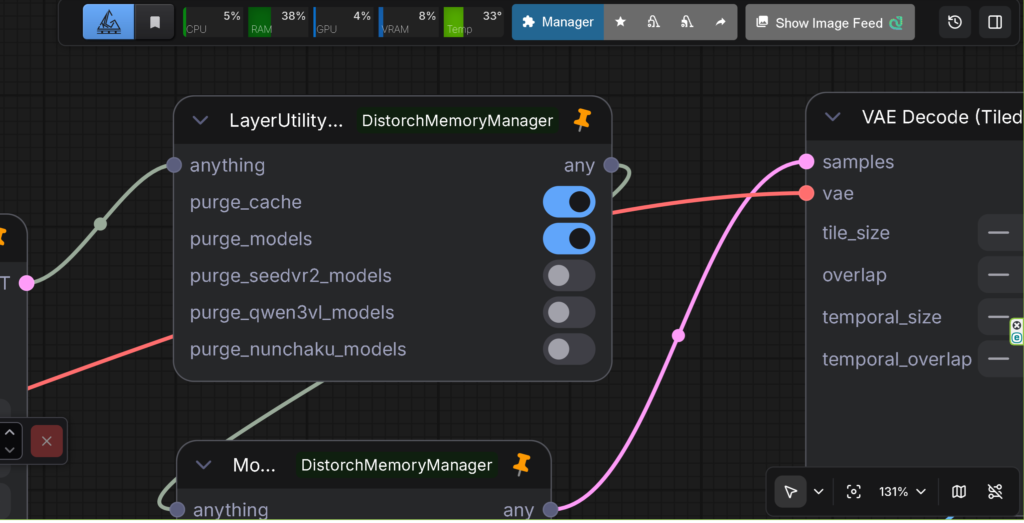
GitHub – ussoewwin/ComfyUI-DistorchMemoryManager: ComfyUI-VRAM-Manager is an independent memory management custom node for ComfyUI. Provides Distorch memory management functionality for efficient GPU/CPU memory handling. Supports purging of SeedVR2 …
Memory Optimizations: JPEG Loading & SDPose Fixes
Recent commits optimize JPEG handling to consume far less memory during load and fix resizing in SDPose nodes.
How it works: Switching or enhancing loaders (pyav/PIL hybrids) for alternative JPEG formats avoids bloated in-memory representations. SDPose resize fix prevents dimension mismatches in pose-conditioned workflows.
Performance implications: Lower RAM pressure during batch image ingestion or reference-heavy graphs (e.g., ControlNet + IP-Adapter). Developers see faster workflow execution and reduced swapping on systems with 16-32GB RAM.
Bullet points:
- Load other JPEG formats without excessive memory overhead.
- SDPose: Correct resize behavior for accurate keypoint mapping.
Expert analysis: These are quiet wins for production users running automated galleries or video frame extraction. In Flux or SD3.5 workflows, combined with intermediate dtype tweaks, they enable higher batch sizes without OOM. Watch for edge cases with exotic JPEG variants—always validate outputs.
Manager & Ecosystem: ACES EXR Toolkit & Ongoing Custom Node Activity
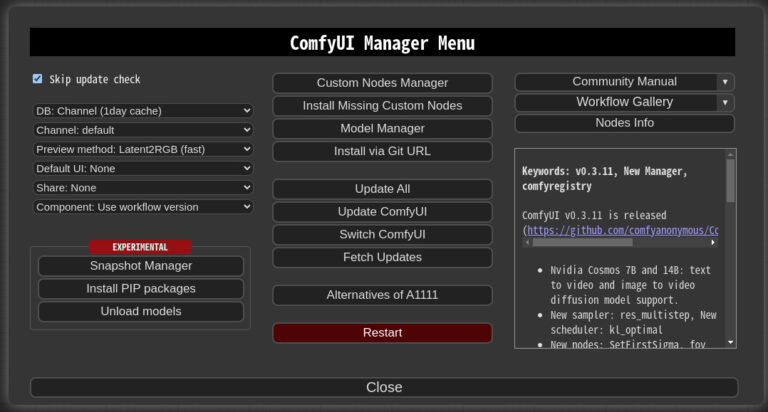
ComfyUI-Manager saw a PR for the ACES EXR Toolkit integration, enhancing color-managed workflows for professional VFX/video pipelines.
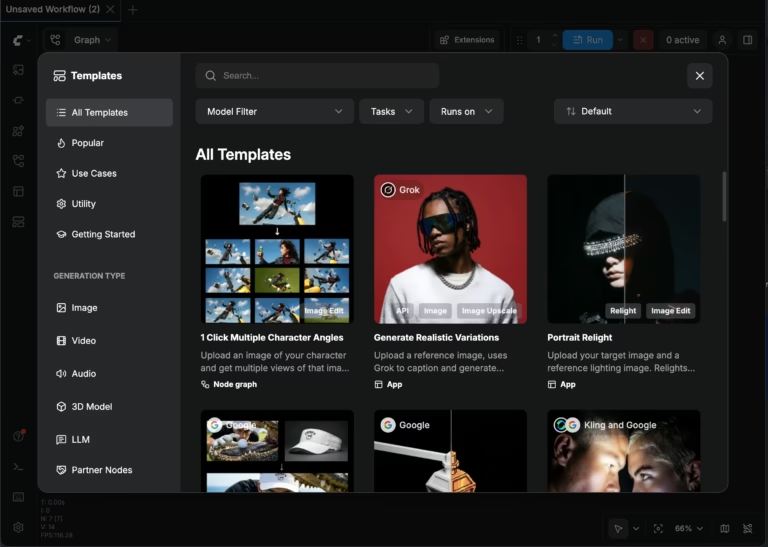
Broader Reddit/X chatter highlights continued custom node proliferation (e.g., face swap with Flux+InsightFace, automation nodes), but no massive new releases in this narrow window. NVIDIA workflows and templates remain active.
Analysis: Color pipeline support (ACES) is crucial as ComfyUI penetrates studios. Under the hood, EXR handling with proper metadata preserves dynamic range for compositing—pair with alpha video loading for end-to-end transparency workflows.
Broader Trends & Forward Insights
The ecosystem trends toward hybrid efficiency: dynamic resource management + native VAE/audio support for video-heavy use. Compatibility with Flux, Wan, Kling, and ERNIE is maturing, but challenges remain in VRAM for 4K+ and multi-model orchestration.
Developers should prioritize testing dynamic VRAM flags and monitoring PRs for subgraph/blueprint enhancements. Expect more partner node polish and hardware parity in coming weeks. For advanced users: experiment with purged caches in looped video gen for sustained performance.
Sources & Further Reading:
- Comfy-Org/ComfyUI Commits
- Official Changelog
- GitHub Releases
- ComfyUI-Manager PRs and community discussions on Reddit r/comfyui.
The images used in this article are sourced from publicly available channels on the internet. They are used solely for the purposes of news commentary, visual illustration, and explanatory reference, and do not constitute commercial use. The author of this article does not own the copyright to these images and makes no claim to any rights over them. If any copyright issues arise regarding these images, please contact the article’s author, and we will promptly address the matter or remove the relevant content.